No silly mnemonics.
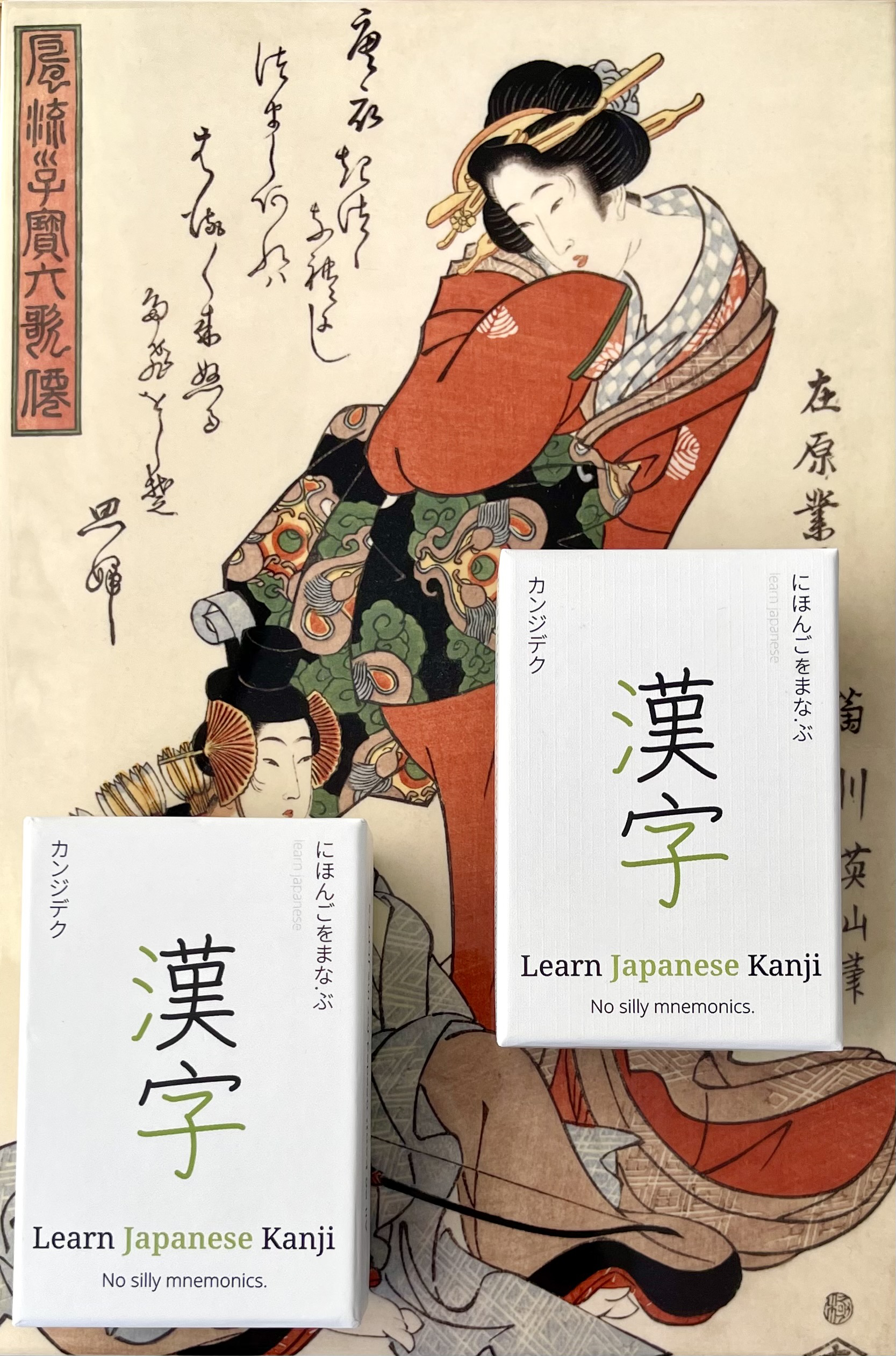
Kanjideck is a thoughtfully designed resource for studying Japanese. With spaced repetition, examples, standalone readings, colored radicals, etymology, and more.
“Didn't know where to sing the praises but holy moly. The quality of these cards is insane! Thank you so much for this amazing product.”
“Love the design of the cards that provide helpful context in a digestible manner.”
“Well organized flash cards 👌 what I was looking for for years 😅 well done 😉”
“I like how it links you to the meanings of each example if I wanted to learn more.”
The most challenging part of Japanese is learning the 2136 Kanji characters one needs to be fluent. While it sounds like way too many characters, spaced repetition makes it possible to learn them efficiently.
But, in most resources, spaced repetition is synonymous with brute-forcing all Kanji into your brain with silly mnemonics.
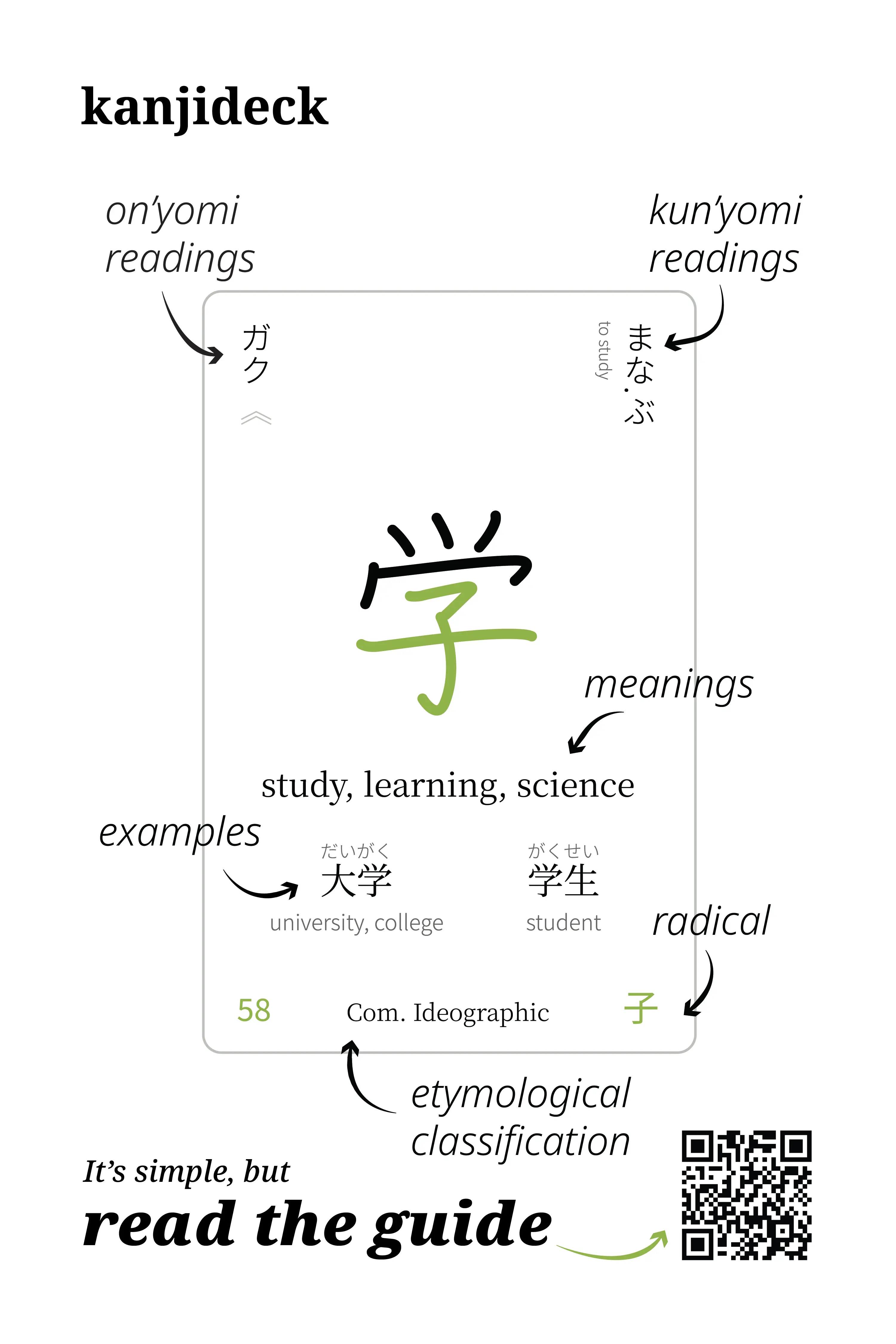
Kanjideck is better. No silly mnemonics. A deck of cards tailored for understanding, not memorizing, with spaced repetition. Each Kanji can be immediately useful through verb and adjective readings, and compound examples which only use Kanji you've already seen. That, colored radicals, and etymological hints, make remembering and learning much easier.
Put simply, studying Japanese using Kanjideck follows three simple steps:
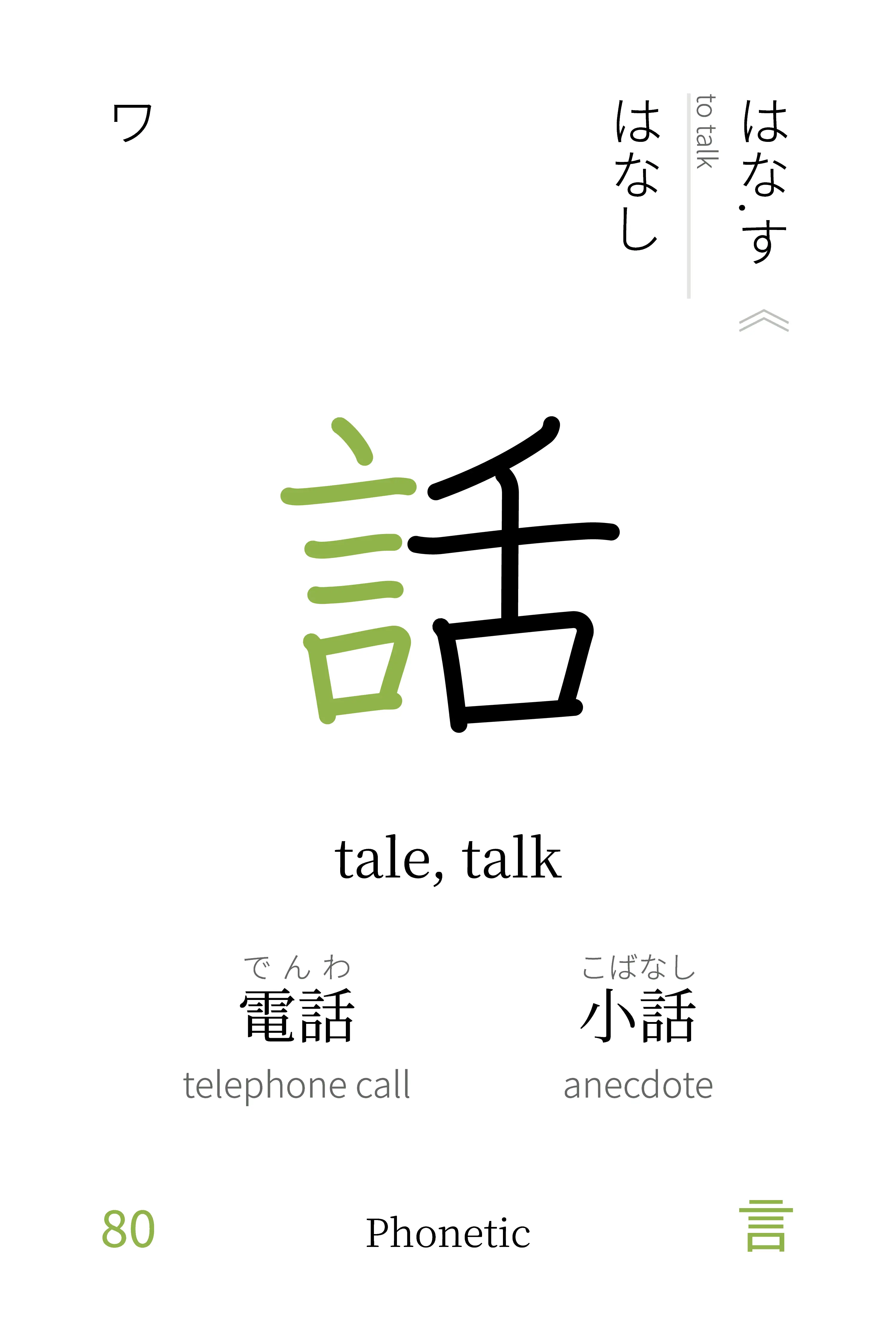
To review a card, pick it up with the colored side facing towards you and try to actively recall, from the Kanji in the center, its meanings and at least one of its readings. Then, practice conjugating verbs, adjectives, and examples.
Example
The kanji 「話」has meanings “tale, talk”.
The compound word「電話」is formed by the kanji for
“electricity” (電) and the one for “talk” (話), and it means “telephone call”.
And the reading of 「話」with the trailing「す」hiragana character is the
verb “to talk” 「話す」. The polite conjugation is 「話します」.
Studying each card means, foundationally, to learn the kanji in that card, but it also means to practice these many aspects of Japanese to contextualize the kanji while improving your fluency overall.
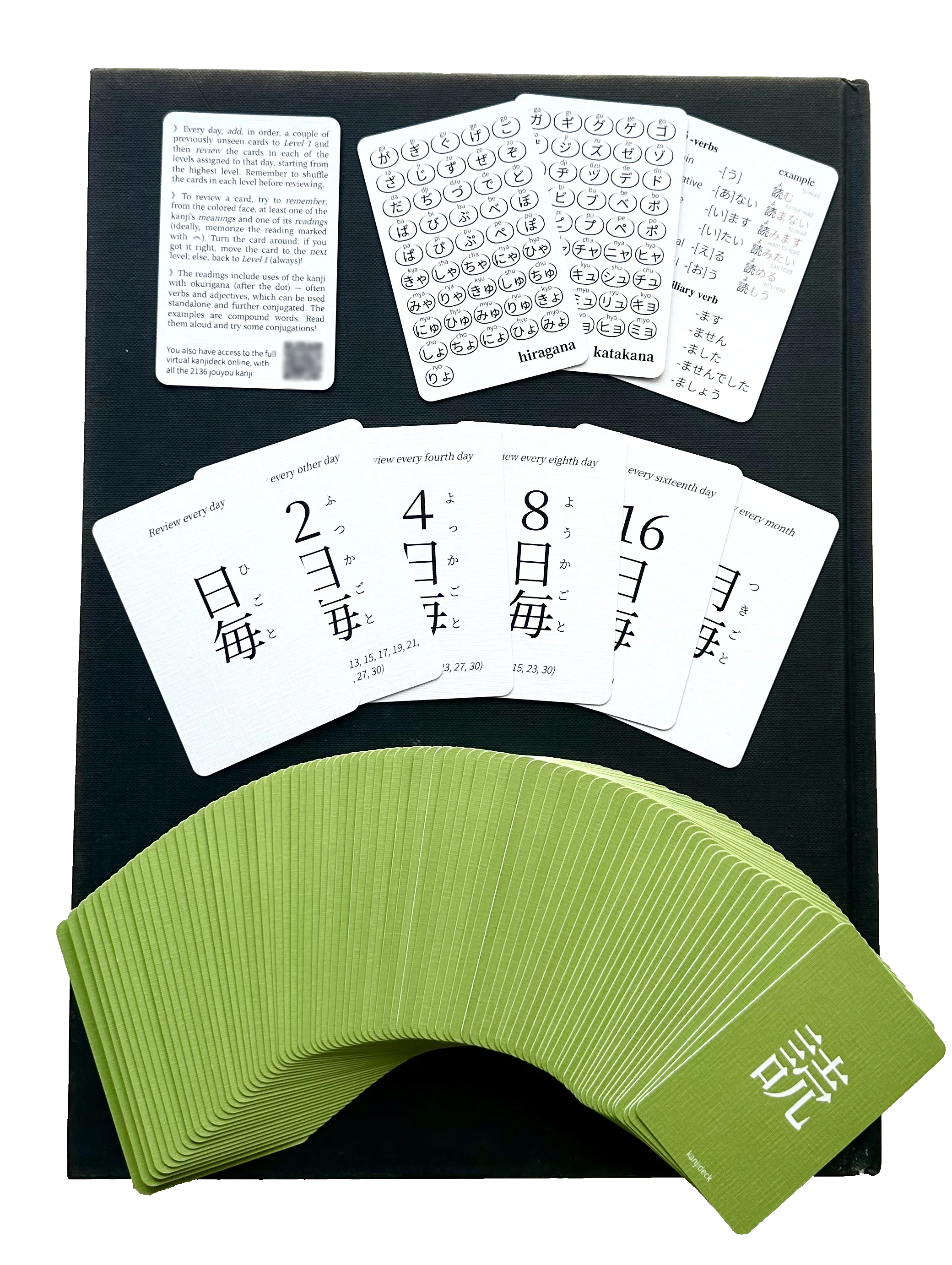
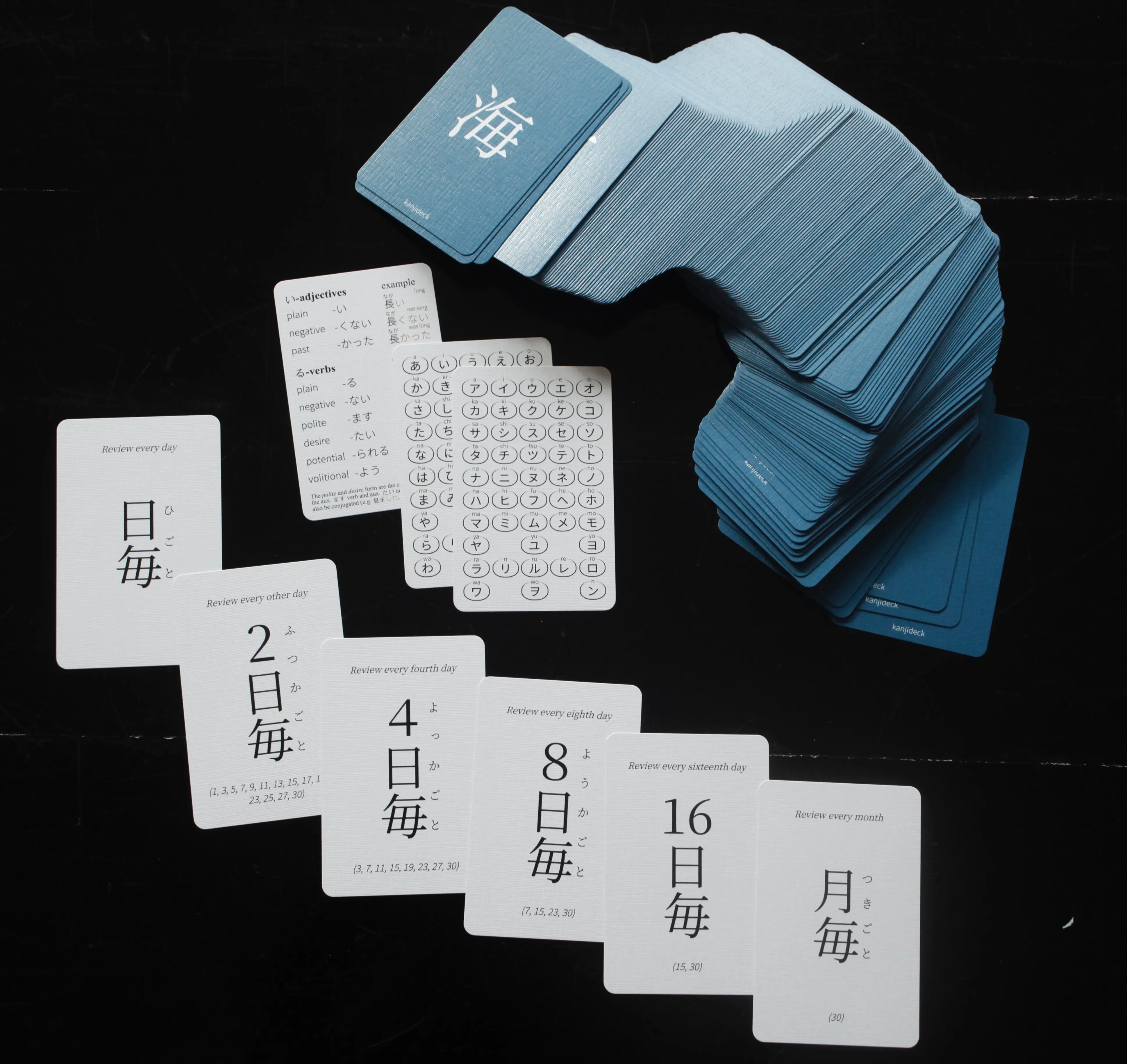
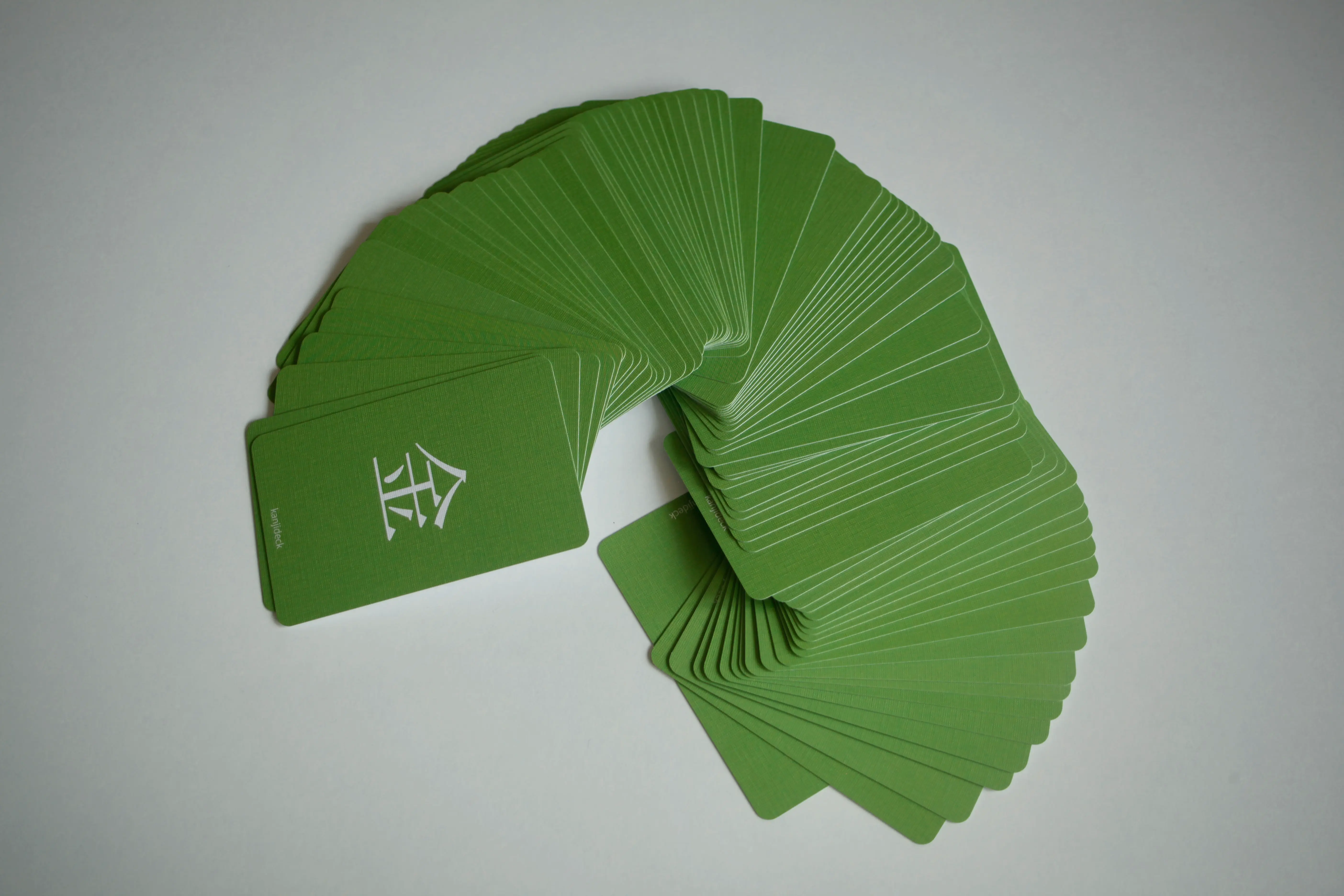
The standard green deck contains 90 physical cards designed to study and learn the 80 Kanji needed for JLPT-5, the entry-level Japanese proficiency test.
Tutorial card
For quick reference.
Reference cards
Hiragana, katakana, and verb & adjective conjugation.
Spaced-repetition cards
A physical SRS, using card separators for levels.
Kanji cards
All characters typically needed for the JLPT-5.
See other decks below.
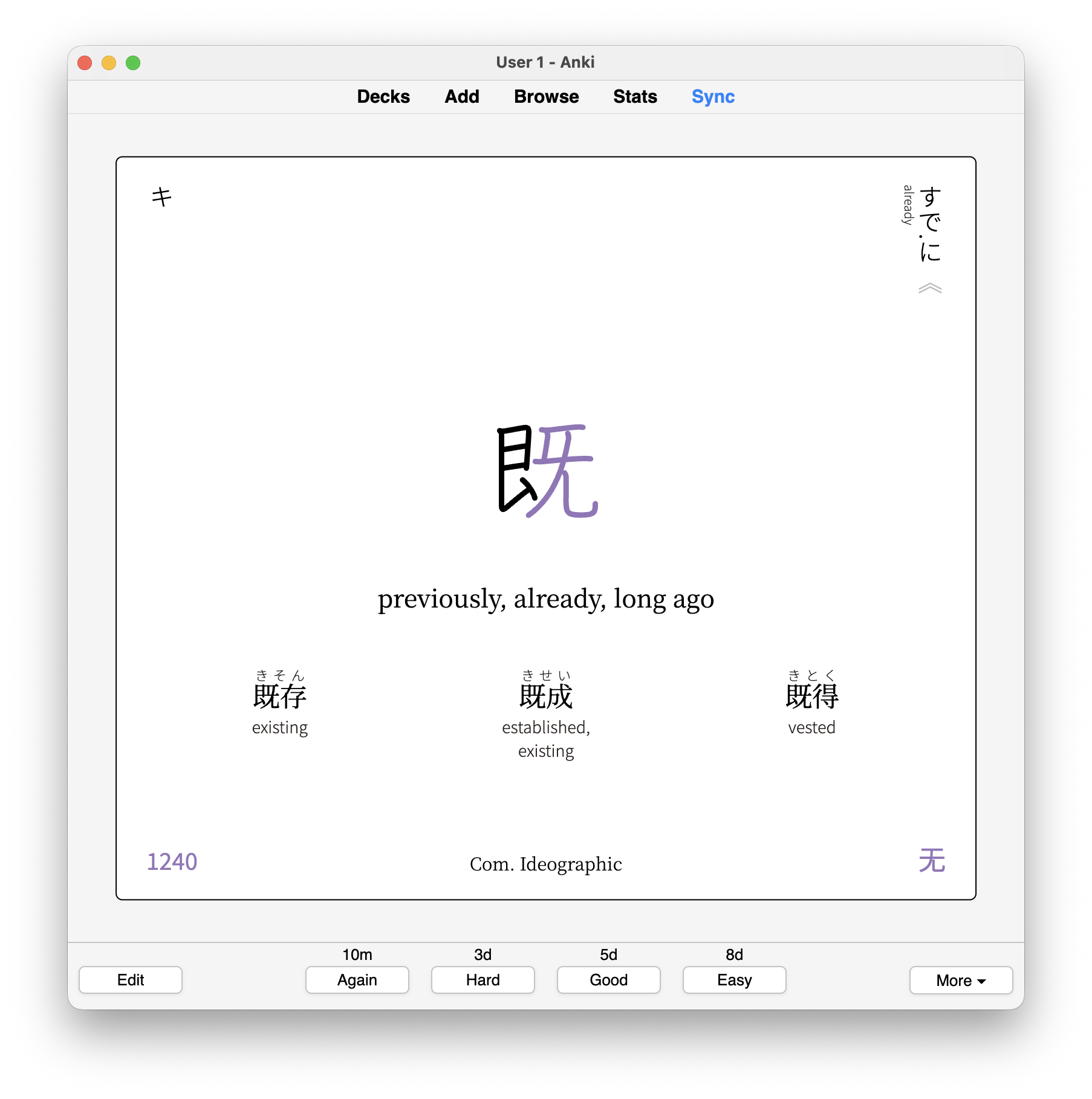
The digital deck covers all the 2136 Jōyō Kanji in digital cards. The content of the digital cards is just like the physical cards, with the Kanji at the center and all details surrounding it. Requires Anki, the free, open-source flashcard app. The deck is made specifically for Anki.
Digital Kanji cards
A digital card for every Jōyō kanji.
See other decks below.
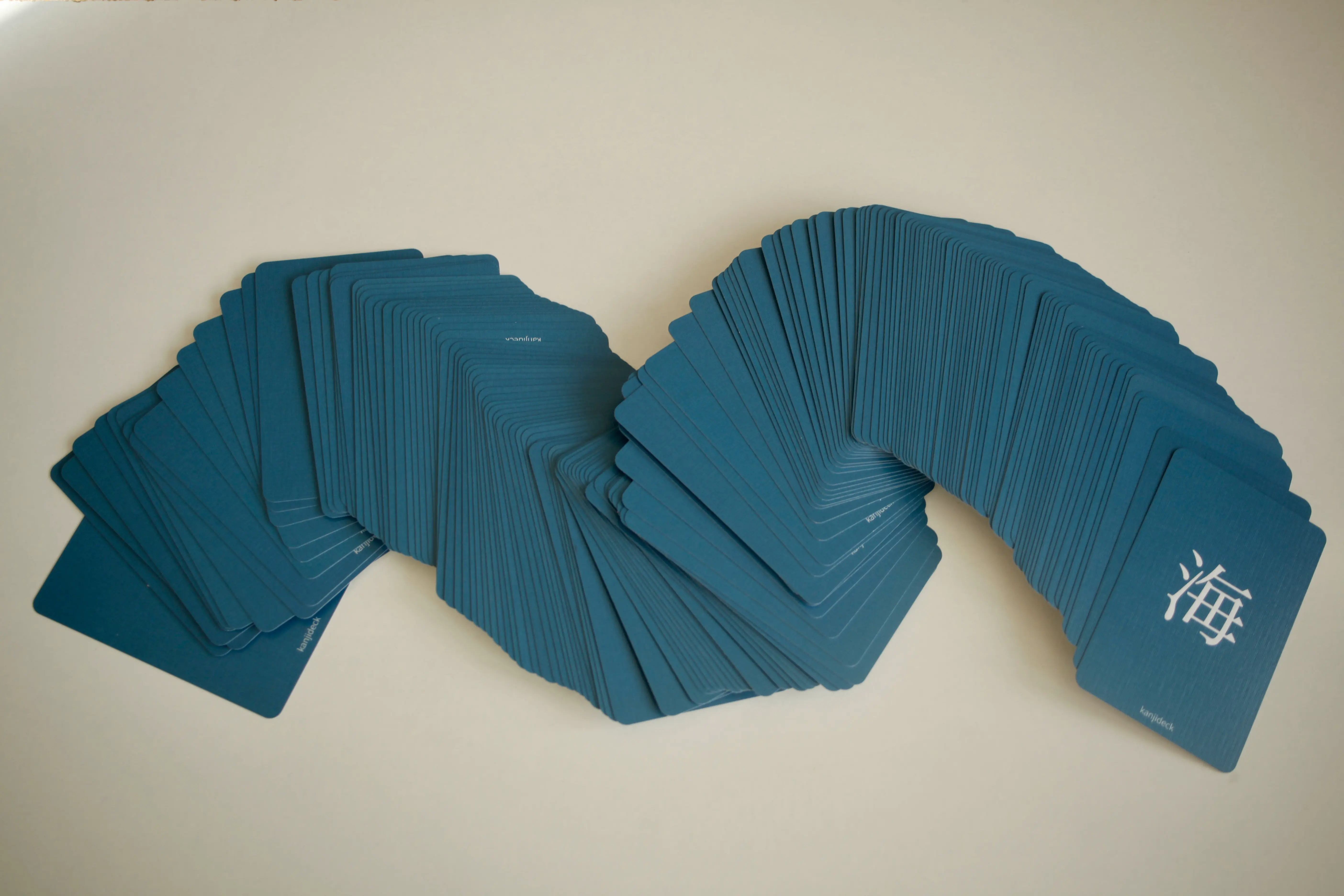
The second Kanjideck level, with a total of 177 physical cards. The blue deck contains the kanji typically introduced for JLPT-4, but does not include the JLPT-5 cards.
Tutorial card
For quick reference.
Reference cards
Hiragana, katakana, and verb & adjective conjugation.
Spaced-repetition cards
A physical SRS, using card separators for levels.
Kanji cards
All JLPT-4 kanjis, does not include JLPT-5.
See other decks below.
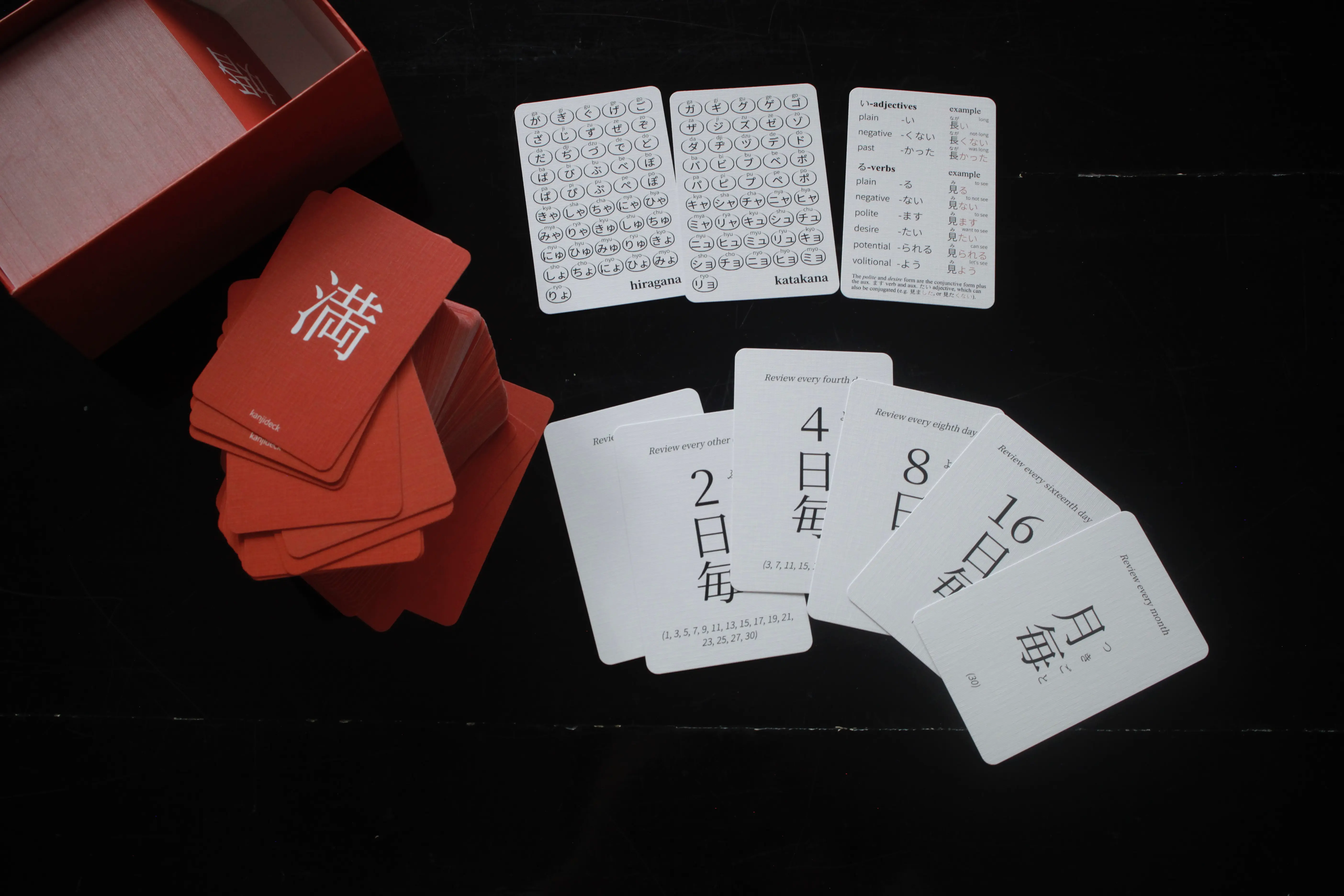
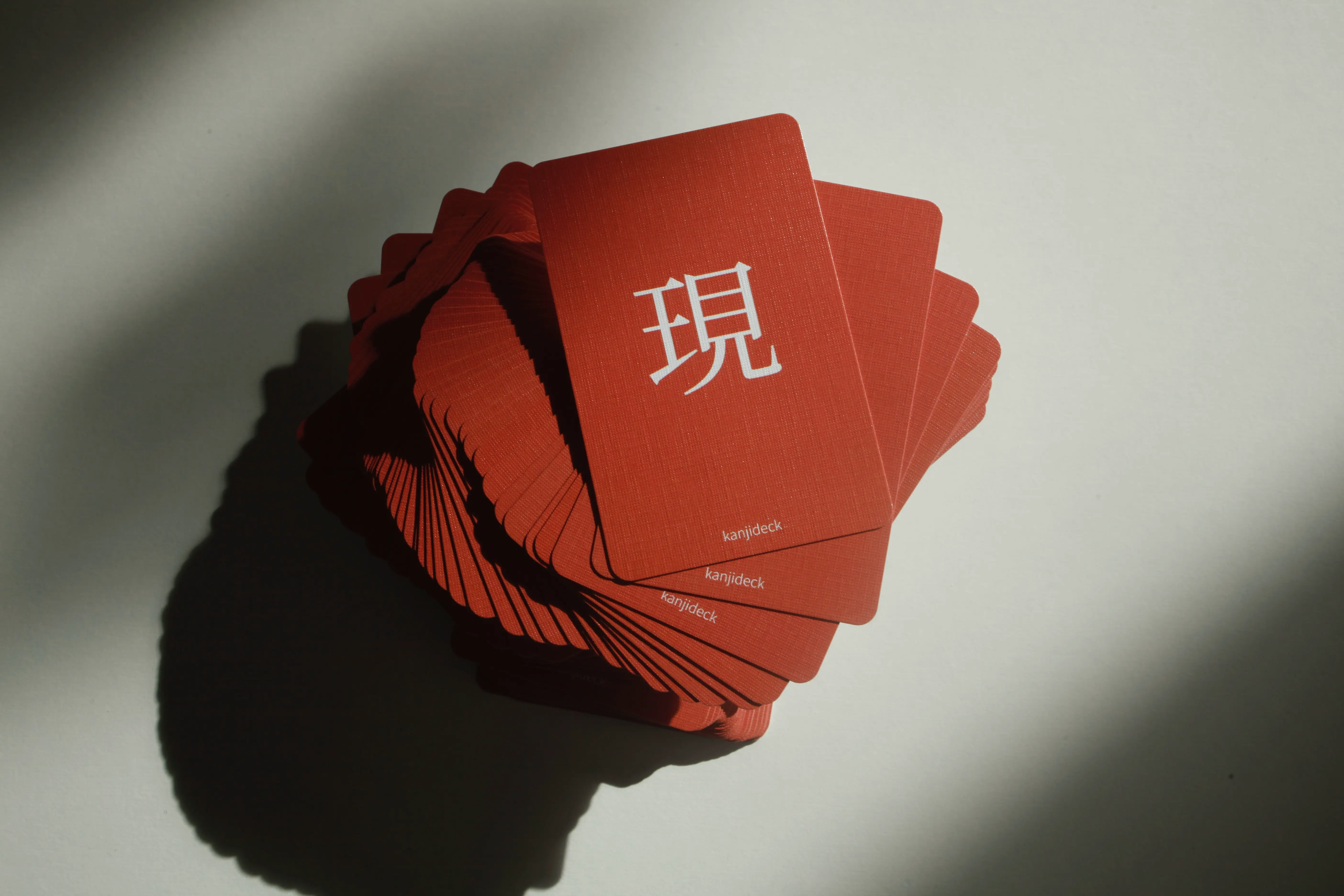
The red deck contains the kanji typically introduced at JLPT-3: a hefty collection of 380 physical cards. It's our largest physical deck. All those cards are for JLPT-3, they do not include JLPT-5 or JLPT-4.
Tutorial card
For quick reference.
Reference cards
Hiragana, katakana, and verb & adjective conjugation.
Spaced-repetition cards
A physical SRS, using card separators for levels.
Kanji cards
All JLPT-3 kanjis, does not include JLPT-5 or JLPT-4.
See other decks above.